Networking
Networking Checklist: 8 Must-Do Items Before Events
Dec 8, 2025
Dec 8, 2025
A practical pre-event checklist to set goals, research attendees, refine your profile and pitch, prepare tools, plan interactions and follow up.
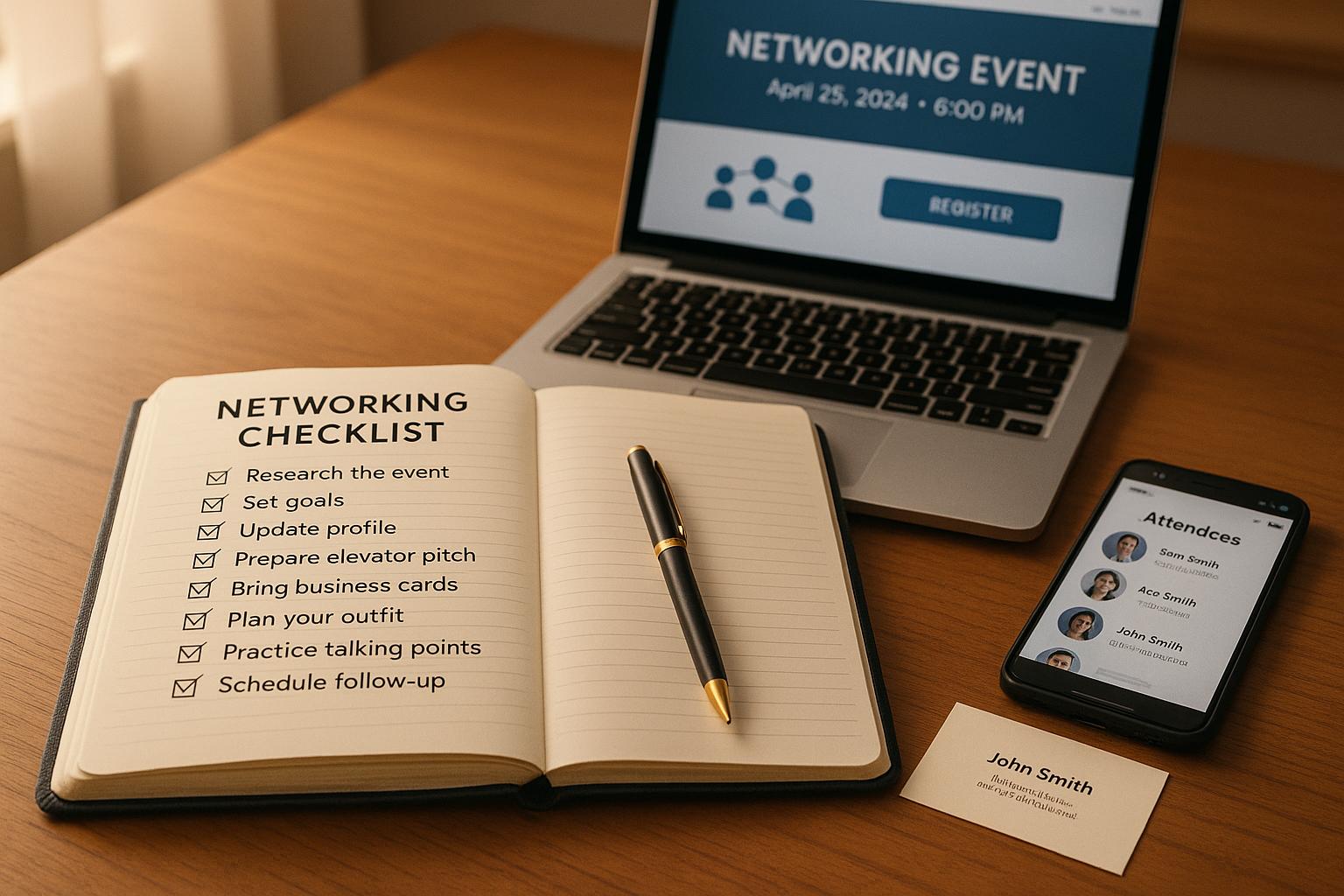
Going to a networking event without preparation is like heading into a meeting without an agenda - it’s unproductive and leaves you scrambling. Whether you're attending a conference in London or a morning meet-up in Manchester, preparation is key to making meaningful connections. Here's a quick summary of what to do before any event:
Set clear goals: Decide who you want to meet and what you want to achieve.
Research attendees and speakers: Use tools like LinkedIn or event apps to identify key people.
Polish your online profile: Update LinkedIn and prepare a concise personal pitch.
Get your toolkit ready: Carry updated business cards and ensure your phone is charged.
Plan your interactions: Prioritise who to meet and prepare conversation starters.
Practise etiquette and confidence: Learn how to start and end conversations smoothly.
Organise follow-ups: Use apps or a CRM to track contacts and send personalised messages.
Take care of yourself: Rest, eat well, and manage your energy for better interactions.
Preparation transforms networking from a random exercise into an opportunity to build real connections. With these steps, you’ll walk into any event ready to make the most of it.
How to Network: Networking Etiquette Tips for Professionals
1. Define Your Networking Intent and Goals
Heading into a networking event without a clear plan is like setting sail without a destination - it’s a waste of time and effort. Before attending, take a moment to define what you want to achieve. This clarity will guide everything from who you approach to how you steer the conversation. Setting clear objectives is the cornerstone of purposeful networking.
Set Clear Objectives
Start by jotting down specific, measurable goals for the event. Avoid vague aims like "meet new people." Instead, focus on actionable targets, such as engaging with five professionals in your industry or identifying two potential collaborators for future projects.
For instance, you could aim to:
Have meaningful conversations with five people in your field.
Identify two individuals who could collaborate on an upcoming venture.
Collect contact details from three professionals in roles you're curious about.
Tailor your goals to the type of connections you’re looking to make. Are you seeking a mentor to guide your career? Potential clients who might benefit from your services? Or perhaps peers who share similar challenges and could serve as accountability partners? Each scenario demands a unique approach, so knowing your priorities ensures you make the most of your time.
Also, consider whether you’re aiming for depth or breadth in your networking. Sometimes, three in-depth conversations can be far more valuable than a stack of twenty business cards from fleeting introductions. At larger conferences, you might focus on meeting more people in the morning and diving deeper into conversations during afternoon workshops. For smaller gatherings, meaningful discussions usually take precedence over quantity.
Match Goals with Your Current Priorities
Your networking goals should align with what’s happening in your professional life right now. Whether you’re launching a startup, transitioning careers, or sharpening your expertise in a specific area, your objectives need to reflect your current priorities.
For example:
If you're an entrepreneur seeking funding, focus on connecting with individuals who have successfully raised capital in your sector or those with skills that complement your own.
If you’re building a fintech startup, it’s far more useful to meet someone who has navigated FCA regulations or secured UK venture capital funding than to have a general chat about business growth.
Your career stage also plays a role. Early in your journey, you might focus on building a broad network. Later, your efforts might shift towards forming strategic, specialised relationships.
Finally, write down your objectives and keep them handy. This quick reference can help you stay focused during the event, ensuring every conversation has purpose and direction.
2. Research the Event and Attendees
Going into a networking event without preparation is like showing up to a party without knowing anyone - it’s a missed chance to make meaningful connections. Doing some homework beforehand can help you approach the event with purpose and confidence.
Review the Event Details
Start by digging into the event agenda. Don’t just skim the schedule - take a closer look at session descriptions, workshop topics, and panel discussions to identify opportunities that align with your interests.
Pay attention to the timing and format of different segments. For example, breakfast sessions are often relaxed and great for casual conversations, while coffee breaks and lunch breaks are prime times for networking. Evening receptions tend to be more social, while morning workshops often attract focused, industry-specific attendees.
If the agenda includes breakout sessions or roundtables, prioritise those that match your goals. For instance, if you’re interested in fintech regulation, a panel on navigating FCA compliance could be a goldmine for meeting the right people. Similarly, workshops on ESG reporting might attract professionals focused on sustainable business practices.
Check if the event offers a mobile app or online platform. Many conferences now provide digital tools that list speakers, sessions, and even attendee profiles. Download the app in advance to familiarise yourself with features like live Q&A, polling, or venue maps.
Look out for networking-specific activities such as speed networking sessions, themed meetups, or dedicated networking hours. Knowing when these take place allows you to plan your day and ensure you’re ready to make the most of these opportunities.
Armed with this information, you’ll be better prepared to navigate the event and make meaningful connections.
Research Attendees and Speakers
Once you’ve got a handle on the event’s structure, shift your focus to who will be there. Many organisers release attendee lists or speaker rosters ahead of time. If this information isn’t readily available, check the event hashtag on LinkedIn or X (formerly Twitter) to see who’s talking about attending.
Start with the speakers and panellists. These individuals are often industry leaders or experts, and they’re usually more approachable than you might expect. Look up their recent work or online activity to find conversation starters. For example, referencing a recent article or project they’ve worked on can show genuine interest and make you stand out.
Next, identify attendees who align with your networking goals. If you’re looking for collaborators, focus on professionals in complementary roles. If mentorship is your aim, seek out senior figures in your field who’ve tackled challenges similar to yours.
LinkedIn can be a powerful tool for this. Search for the event name and filter by people who’ve mentioned they’re attending. Scan their profiles to understand their background, current role, and interests. Take note of any shared connections, as a mutual contact can pave the way for an introduction or provide common ground.
Don’t just aim for senior figures - peers can also offer valuable insights and connections. Create a shortlist of five to ten people you’d like to meet, noting why they interest you and potential topics to discuss. This preparation ensures you’re ready to engage when you spot them.
Use Linqa Spaces to Find Relevant Attendees
If the event has a Linqa Space, this tool can simplify your pre-event networking. Linqa Spaces act as digital hubs where attendees can connect before, during, and after the event, making it easier to find people who share your interests or objectives.
Join the event’s Linqa Space as soon as it’s available and update your profile to highlight your goals and the types of connections you’re seeking. Use the platform’s intent-driven discovery features to filter attendees by shared interests, professional backgrounds, or specific goals. For example, if you’re a marketing consultant looking to connect with SaaS founders, you can narrow your search to focus on those individuals.
Some platforms, including Linqa Spaces, offer AI-powered matchmaking. These tools analyse your preferences and suggest attendees who might be a good fit. By engaging with these features early, you can identify potential connections and even reach out before the event begins.
When you’ve identified someone you’d like to meet, send a brief, personalised message. Instead of a generic “Let’s connect at the event,” try something specific like, “I noticed you’re working on sustainable supply chains - could we chat during the coffee break on Tuesday morning?” This approach is more likely to get a positive response and sets clear expectations.
Linqa Spaces also provide real-time insights into who’s active in the digital space. Look for attendees who are asking questions, sharing insights, or contributing to discussions - these individuals are often open to new connections and could become valuable contacts.
3. Polish Your Profile and Pitch
First impressions count, especially at networking events where you only have seconds to make an impact. Before stepping into any room, take time to refine both your online presence and your personal pitch. Together, these elements will ensure you leave a lasting impression.
Update Your Professional Profile
Your online profile should reflect who you are right now and what you aim to achieve. Start with LinkedIn, the UK's leading platform for professional networking. Refresh your headline, summary, and experience to align with your goals for the event.
For example, if you’re attending a conference to connect with professionals in renewable energy, make sure your profile highlights relevant projects or expertise. A headline like "Operations Manager | Focused on Sustainable Supply Chains" is far more engaging than a generic "Operations Manager at Company X."
Choose a professional, recent photo. Avoid outdated holiday pictures or overly stiff corporate shots. A photo taken in natural light with a genuine smile is often the most effective.
Don’t forget to review your recent activity. If you haven’t posted anything since 2022, it might give the impression that you’re not actively engaged in your field. While posting daily isn’t necessary, sharing a well-timed article or commenting on industry news before the event can demonstrate that you’re up to date.
If you're using platforms like Linqa Space, tailor your profile to reflect your networking goals. Be specific about what you’re seeking and what you can offer. For instance, instead of saying "Looking to network", try something like "Seeking fintech founders interested in open banking solutions." This clarity makes it easier for others to see how they can connect with you.
Finally, ensure your contact details are accurate. Outdated email addresses or broken links could mean missed opportunities.
Once your profile is polished, focus on perfecting your verbal introduction.
Craft a Personal Pitch
Your personal pitch should be brief, engaging, and memorable. Aim for a 30- to 60-second introduction that highlights your strengths and invites further conversation.
The goal is to clearly convey what makes you stand out. Instead of saying, "I’m a marketing consultant", try something like, "I help B2B SaaS companies lower customer acquisition costs through content-led growth strategies." This not only makes your expertise clear but also leaves a lasting impression.
A good pitch has a simple structure. Start with a hook - perhaps a surprising fact, a thought-provoking question, or a concise statement about your work. Then, share a quick overview of your professional background. Wrap up with an open-ended question or call to action that encourages dialogue.
For example: "I’m Sarah, and I work with early-stage tech startups to create scalable HR systems. I’ve noticed many founders struggle with hiring as their businesses grow - does that sound familiar to you?"
The aim isn’t to sell yourself immediately but to leave a positive impression that leads to follow-up conversations. Practise your pitch until it feels natural and adaptable to different situations.
With your pitch in hand, it’s time to think about how to start conversations.
Prepare Conversation Starters
Having a few conversation openers ready can make networking much easier. Focus on open-ended questions that are relevant to the event and encourage dialogue.
Start with event-specific questions like, "What did you think of the keynote speaker?" or "How did you find out about this event?" These can lead to deeper discussions about shared interests or professional goals.
If you’re feeling more adventurous, consider a personal approach. Debra Fine, author of The Fine Art of Small Talk, suggests preparing a few general topics and questions to get others talking. For example: "Are you originally from London, or did work bring you here?" or "Have you been to similar events recently?" These types of questions show genuine curiosity and help establish common ground.
Casual observations or compliments can also break the ice. A comment like, "I love your shoes - where did you get them?" or "Have you tried the desserts yet? They look amazing" can lead to a relaxed, friendly conversation.
For more business-focused discussions, try questions like, "What networking events have been the most useful for you?" or "How can I help refer people to you?" These kinds of questions show you’re interested in mutual benefit and can open doors to meaningful dialogue.
The key is to have a few ideas ready but let conversations flow naturally.
4. Prepare Your Networking Toolkit
Heading to a networking event without the right tools can leave you feeling unprepared and stressed. Taking the time to organise your toolkit - both physical and digital - helps you focus on building meaningful connections.
Essentials to Bring
Let’s start with the basics. Have a supply of updated business cards ready to hand out. These remain a reliable way to leave a lasting impression.
"Although we are firmly in the digital age, business cards remain a powerful tool at networking events." - The Cannon
Double-check that your cards are professional and up to date. Details like your job title, contact information, and company name should all be accurate - there’s no substitute for presenting a card with the right information.
Your smartphone is another must-have. Make sure it’s fully charged before heading out, and pack a portable charger just in case. This allows you to exchange LinkedIn connections, access event schedules, or even use digital contact cards without worrying about running out of battery.
For a modern twist, consider using digital badges. These handy tools let you share your contact information instantly with a tap or scan, saving time and making the process more efficient.
Get the Logistics Right
Sorting out logistics ahead of time can help avoid unnecessary stress on the day.
Start by researching the venue. Confirm the address, familiarise yourself with the location, and note any nearby landmarks. If you’re heading somewhere unfamiliar, this prep work can make a big difference to your confidence.
Plan your route carefully and allow for potential delays. For example, London’s transport system can be unpredictable, so aim to arrive at least 15 minutes early. It’s far better to have time to settle in than to rush in feeling flustered.
Don’t overlook the dress code. Some events call for formal business attire, while others lean towards smart casual or industry-specific styles. If you’re unsure, it’s safer to go for a professional look that you’re also comfortable wearing.
Make Linqa Work for You
Digital tools like Linqa can revolutionise the way you network, but they’re only effective if you’ve set them up in advance. Download the app, log in, and join the event’s Linqa Space before the day begins. This lets you start conversations early and identify key people you’d like to meet.
Many events now use dedicated Spaces where attendees can connect before, during, and after the event. By joining early, you can share what you’re looking for and what you can offer, making it easier for others to seek you out.
Take time to review your Linqa profile and tailor it to the event. For instance, if you’re attending a fintech conference, highlight your relevant experience or interests. The more specific your profile, the more likely you are to make valuable connections.
Lastly, familiarise yourself with Linqa’s features so you can exchange contact details effortlessly during the event.
With your toolkit ready and logistics sorted, you’ll be well-prepared to make the most of your networking opportunities.
5. Plan Targeted Interactions
A focused approach ensures you make the most of your time and energy, especially when faced with countless networking opportunities. By building on your goals and research, you can strategically plan how to engage with the right people.
Categorise Potential Contacts
Organise your contacts into three groups: must-meet, good-to-meet, and optional. This prioritisation helps you focus your efforts on those who align closely with your objectives.
Must-meet: These are the individuals who directly support your goals. Think of speakers in your field, decision-makers at companies you're targeting, or experts whose insights could help you advance.
Good-to-meet: This category includes people who may not be critical now but could provide value later. They might work in related industries, share similar interests, or have useful networks.
Optional: These are individuals who don’t directly tie into your immediate goals but could still offer an interesting conversation. If the opportunity arises naturally, engage with them, but don’t prioritise these interactions.
Establishing clear objectives - whether it’s meeting specific people, learning about trends, or exploring collaborations - gives you a framework to decide who to approach first. Once you’ve categorised your contacts, document key details immediately to streamline your follow-up later.
Create a Note-Taking Structure
Networking events can be a whirlwind, so jotting down key details right after each interaction is essential for effective follow-up.
Use business cards to capture quick notes. Write down the date, location, and any memorable details about your conversation. If the card is laminated, a fine-point Sharpie works well.
Go beyond the basics - note specific discussion points, shared interests, or unique observations. For instance, if someone mentioned a project they’re working on or expressed interest in a particular collaboration, make a note of it. These details will be invaluable when crafting personalised follow-up messages.
Organise contacts by their relevance to your goals - whether they’re potential clients, collaborators, mentors, or peers. This classification helps you tailor your approach for each relationship. Once home, transfer your notes into a centralised system. Some people prefer LinkedIn, while others might use a CRM tool or a simple spreadsheet. The key is to consolidate everything in one place so you can track interactions and stay organised.
Use Linqa's Matching Features
Digital tools like Linqa can revolutionise your networking strategy, helping you identify valuable connections before the event even starts.
Start by completing your Linqa profile with details about your business, specialities, and interests. This ensures accurate AI-driven recommendations tailored to your needs.
Leverage Linqa’s search filters to find attendees who align with your criteria. Search based on shared interests, professional backgrounds, or specific goals, allowing you to create a targeted list of contacts in advance.
One standout feature of Linqa is the ability to schedule meetings ahead of time. Instead of relying on chance encounters, you can pre-arrange one-on-one interactions with key decision-makers and high-value contacts, making your event experience more productive.
Additionally, Linqa’s AI-generated matchmaking suggestions can help you discover connections you might have missed. Enable notifications to stay updated on potential matches and review these suggestions regularly.
Finally, explore Linqa’s detailed attendee profiles, such as SmartProfiles, to gather insights about potential contacts. This feature gives you the context needed to plan meaningful conversations before the event even begins.
6. Rehearse Confidence and Etiquette
Now that you've built your pre-event toolkit and planned your interactions, it's time to focus on confidence and etiquette. Practising how to navigate conversations will help you come across as self-assured while respecting professional boundaries and cultural norms. This preparation ensures you make a positive, lasting impression.
Practice Starting and Ending Conversations
Starting a conversation can feel daunting, but having a few reliable openers makes it much easier. Keep it simple and genuine to invite engagement without making the other person feel pressured.
A straightforward introduction works wonders: "Hi, I'm Sarah - what brings you here today?" Or, reference something specific about the event: "That keynote on digital transformation was fascinating. Have you implemented any of those strategies in your work?" This shows you're engaged with the event and provides an instant talking point.
If you're stuck, commenting on the venue or format can naturally break the ice: "The organisers have done a brilliant job with this space. Are you here with your company or independently?"
Equally important is knowing how to end conversations gracefully. Be polite, direct, and leave the door open for future contact.
You might say: "It's been great chatting about supply chain innovation. Shall we exchange details so we can continue the conversation?" Or: "I don't want to take up too much of your time, but I'd love to follow up on the Manchester project you mentioned. Can I connect with you on LinkedIn?"
If you need to move on, try: "I've enjoyed our chat. I'm going to mingle a bit more, but I hope you have a great evening."
Practising these phrases aloud before the event can help them flow naturally when the moment arises.
Once your conversation techniques feel solid, it’s time to establish boundaries to keep your interactions focused and professional.
Set Personal Boundaries
Networking events can be lengthy and sometimes overwhelming, so it’s helpful to set clear limits on your time and energy beforehand. This keeps you comfortable, focused, and professional throughout.
Decide in advance how long you’ll stay. For example, if an event runs from 18:00 to 21:00, you might commit to staying until 20:00. This gives you a clear endpoint and an easy way to exit conversations: "I’m heading off shortly, but before I go, I’d like to make sure we exchange details."
Be ready with polite ways to steer clear of topics you’d rather avoid: "I’d prefer to focus on the exciting projects I’m working on now" or "That’s not something I usually discuss at events, but I’d be happy to share my experience in the sector."
If alcohol is served, remember you’re under no obligation to drink. A soft drink or tonic water with lime is perfectly fine. If you do choose to drink, limit yourself to one or two to stay sharp.
Managing your energy is just as important. If large gatherings leave you feeling drained, plan short breaks to step outside, take a breath, and regroup. These pauses can help you stay energised and present throughout the event.
With your boundaries in place, the next step is to align your conduct with local norms.
Adapt to UK Networking Norms
Understanding local expectations is key to navigating networking events smoothly. In the UK, certain behaviours and customs are especially important to keep in mind.
Queuing is a big deal. Whether it’s for registration, refreshments, or speaking to a popular attendee, always join the queue and wait your turn. Jumping ahead will leave a bad impression. If you’re unsure whether a queue exists, just ask: "Are you waiting to speak with the speaker?"
Personal space matters. Maintain about an arm’s length of distance during conversations, and pay attention to body language. If someone steps back, it’s a sign you’ve moved too close. Handshakes are the standard greeting, but avoid other physical contact unless the other person initiates it.
Introductions are typically simple: your first name, surname, role, and company. For example: "I’m James Mitchell, marketing director at Greenfield Solutions." When introducing others, add context to help them connect: "Emma, this is David Chen - he’s working on sustainable packaging, which I know ties into your new project."
Small talk is a common way to ease into business discussions. Brief comments about the weather, transport, or the event itself can help establish rapport. A minute or two of light conversation shows you’re approachable and not just there to collect business cards.
Understatement and humour are often part of British professional communication. People may downplay their achievements or use self-deprecating humour. For example, if someone describes their company as "doing reasonably well," they might actually be experiencing strong growth. A modest tone tends to resonate better than overt boasting: "We’ve had a decent year" rather than "We’ve smashed our targets."
Directness is nuanced. While clarity is valued, requests or disagreements are often softened with polite language. Instead of saying, "That won’t work," you might hear, "That could be challenging" or "We might need to consider alternatives." Understanding these subtleties helps you respond appropriately.
Finally, punctuality is essential. Aim to arrive within 15 minutes of the stated start time. Arriving too early might inconvenience organisers, while showing up more than 30 minutes late could mean missing valuable networking opportunities or key introductions.
7. Organise Your Follow-Up System
After making meaningful connections, having a solid follow-up plan is key to turning brief encounters into long-term relationships. Acting promptly while conversations are still fresh ensures you stay memorable and professional.
Choose and Prepare Contact Storage
Before the event, pick a tool to organise and store contact details. This could be a dedicated app, a CRM platform, or a scanning solution, depending on your needs.
For simple and efficient contact management, apps like ContactBook and GoConnectIQ are great options. These tools let you save profiles, add notes, assign tags (like "Tech Conference 2025" or "Investor"), and set follow-up reminders. GoConnectIQ, for instance, offers a free trial, followed by a subscription fee of £10 per month or £99 annually - ideal for frequent networkers.
If you’re handling a larger number of contacts or need integration with business processes, CRM systems like Salesforce, HubSpot CRM, Zoho, or Pipedrive provide advanced features. These platforms help track interactions, store detailed contact information, and analyse engagement for more targeted follow-ups. They’re particularly useful if you attend multiple events and require a comprehensive record of conversations and outcomes.
Complement these tools with note-taking apps like Evernote or Notion to jot down key details during or right after a conversation. These apps allow you to save text, voice notes, or images, ensuring you remember important points such as someone’s current project or shared interests. Such details can make your follow-ups more personalised.
If you still collect physical business cards, use scanning apps like CamCard, Evernote, or ScanBizCards to digitise them directly into your CRM. Alternatively, platforms like Uniqode combine digital business cards with integrated address books, automatically syncing contact details to your system.
Before the event, ensure your chosen tool is set up and ready to use. Create tags or categories, test syncing features, and familiarise yourself with the interface. The smoother the process, the easier it will be to capture details on the spot.
Draft Follow-Up Templates
Having pre-written follow-up templates saves time and ensures your messages are polished and professional. Tailor these templates to different scenarios, but leave room for personalisation.
For a potential client or business lead, keep it professional and reference your conversation:
"Hi [Name], it was great meeting you at [Event Name]. I enjoyed learning about your plans to expand into the Manchester market. As we discussed, I’d be happy to share insights from our work with similar retailers in the North West. Would you be available for a 20-minute call next week?"
If you connected with a speaker or expert, show appreciation and suggest a next step:
"Hi [Name], I really appreciated your presentation on digital transformation at [Event Name]. Your insights on integrating legacy systems resonated with the challenges we’re facing at [Your Company]. I’d love to discuss further over coffee if you have time in the coming weeks."
For someone who offered an introduction or resource, make it easy for them to follow through:
"Hi [Name], it was lovely meeting you at [Event Name]. Thanks for offering to introduce me to Sarah at Greenfield Solutions. I’d appreciate the connection - shall I send you a quick note about my background to forward along?"
And for a peer or potential collaborator, keep it friendly and open-ended:
"Hi [Name], I really enjoyed our chat about sustainable packaging at [Event Name]. It seems we’re tackling similar challenges. Let’s stay in touch - perhaps we can exchange ideas over a virtual coffee. Let me know if that works for you."
These templates are just starting points; always personalise them with details from your conversation to show genuine interest. Save them in a notes app so they’re ready to tweak and send shortly after the event.
Use Linqa for Post-Event Follow-Up
If you’ve set up Linqa Spaces before the event, its post-event tools can help you maintain momentum. Linqa provides insights into your network, helping you prioritise follow-ups and keep connections active.
After an event, Linqa lets you review your new contacts and see how they fit into your overall network. You can identify mutual connections, shared goals, or potential opportunities for collaboration. This clarity makes it easier to decide who to reach out to first and how to approach them.
Linqa’s evolving profile feature is particularly useful. As your goals and interests update over time, your connections can see these changes, creating natural opportunities to reconnect. For example, if you met someone in December 2025 but didn’t have an immediate reason to collaborate, an update to your profile highlighting a relevant project could prompt them to reach out - or give you a reason to re-engage.
The platform’s real-time network health insights also help you monitor which relationships are active and which might need attention. Instead of letting valuable connections fade, you can reach out with something helpful - a relevant article, an introduction, or simply a check-in to see how their project is progressing.
Additionally, Linqa Spaces keeps you connected to the broader event community. If you attended a conference in London, staying active in the related Linqa Space allows you to continue conversations, share resources, and discover others with similar interests who may not have been on your radar during the event. This ensures your networking efforts remain fruitful long after the event ends.
8. Focus on Your Mindset and Wellbeing
Networking events can be exhausting, both mentally and physically. Just like planning your strategy or perfecting your pitch, taking care of your mindset and wellbeing is essential for building meaningful connections. How you feel - both emotionally and physically - has a direct impact on how you interact with others. So, preparing yourself mentally and prioritising your wellbeing is just as crucial as updating your LinkedIn profile or practising your elevator pitch.
Plan for Energy and Confidence
Walking into a room full of strangers takes energy, and being tired, hungry, or stressed can make it harder to connect authentically.
Start by ensuring you’re well-rested. Aim for a solid seven to eight hours of sleep the night before to stay sharp and engaged. If the event is in the evening, consider a short nap or break during the day to recharge. Showing up drained can make it harder to remember names, follow conversations, or exude confidence.
Fuel your body with the right nutrients. Stay hydrated and eat balanced meals throughout the day. Low blood sugar or dehydration can leave you feeling irritable and unfocused. A meal with protein, complex carbs, and vegetables a couple of hours before the event can help keep your energy steady. Avoid heavy meals or too much caffeine, which can leave you feeling sluggish or jittery. If food is served at the event, eat lightly so you can focus on engaging with others instead of juggling a full plate.
Wear something that boosts your confidence and feels comfortable. The last thing you want is to be distracted by tight shoes or an itchy outfit. Check the dress code beforehand and choose clothing that fits the occasion while allowing you to move and breathe easily.
Arrive early if you can. Getting there before the room fills up gives you a chance to settle in, grab a drink, and ease into the atmosphere. It’s also much easier to strike up conversations with early arrivals than to jump into already-formed groups in a crowded room.
Before stepping in, take a moment for a quick grounding exercise. Stand tall, take a few deep breaths, and remind yourself why you’re there. Even small physical adjustments - like maintaining good posture, making eye contact, and smiling - can help you feel more at ease and confident.
Set Achievable Targets
Overloading yourself with unrealistic goals can quickly lead to feeling overwhelmed. Telling yourself you need to meet everyone in the room or land a major client by the end of the night only adds unnecessary stress.
Instead, aim for smaller, manageable goals. Prioritise having three meaningful conversations rather than trying to talk to every single person. Quality connections are far more valuable than a stack of business cards from people you barely remember.
You can also set specific, action-oriented goals. For example:
Introduce two attendees to each other.
Ask a thoughtful question to a speaker.
Reconnect with someone you’ve met at a previous event.
These mini-goals give you a purpose without making the event feel overwhelming. If you’re naturally introverted or find large gatherings draining, allow yourself to take breaks. Step outside for fresh air, visit the loo, or find a quieter spot to regroup. Pacing yourself ensures you stay engaged when it matters most.
Celebrate your small victories as they happen. Did you strike up a conversation with someone new? Fantastic. Exchanged contact details with someone interesting? That’s progress. Acknowledging these moments keeps you motivated and helps shift your focus to what you’ve achieved, rather than what you haven’t.
Use Reflection to Reduce Anxiety
Networking nerves are common, but you can shift your mindset to make the experience less intimidating. Instead of focusing on what you hope to gain from the event, think about what you can offer others. This simple perspective change can make networking feel less transactional and more genuine.
Take a moment before the event to reflect on your strengths. Maybe you have expertise in a particular area, valuable connections, or simply a willingness to listen and support others. Approaching conversations with a spirit of generosity - offering introductions, sharing insights, or just being approachable - makes interactions feel more natural.
Jot down a few recent professional achievements or skills you’re proud of. Whether it’s a project you completed, a challenge you overcame, or a new skill you’ve mastered, reminding yourself of these successes can counteract imposter syndrome and boost your confidence.
If certain scenarios make you anxious - like approaching someone senior or dealing with awkward silences - mentally rehearse how you’ll handle them. Visualise yourself walking up to someone, introducing yourself, and starting a conversation. This kind of mental preparation can make the real thing feel less daunting.
Shift your focus to curiosity. Instead of thinking, “I need to impress this person,” ask yourself, “What can I learn from them?” or “How can I help them?” This approach lowers the stakes and makes conversations feel more collaborative.
Finally, remember that everyone else is there for the same reason. Most attendees are just as eager to connect and just as nervous about making a good impression. You’re not alone, and the person you’re about to approach will likely appreciate you taking the initiative.
Taking care of your mindset and wellbeing isn’t just a nice-to-have - it’s the foundation for everything else. When you’re rested, focused, and approach the event with a positive, generous attitude, you’re far more likely to create the kind of connections that leave a lasting impression.
Conclusion
Networking events can feel daunting, but they don’t have to be. The difference between walking away with a stack of forgotten business cards and forming meaningful connections boils down to one key factor: preparation.
By focusing on eight essential steps - setting clear goals, researching the event, refining your profile and pitch, assembling your toolkit, planning purposeful interactions, practising good etiquette, organising follow-ups, and cultivating the right mindset - you can turn these events into opportunities for genuine connection. A focused approach ensures you present your best self every time.
Research indicates that 95% of professionals value in-person communication, yet many show up unprepared. Preparation transforms networking from a hit-or-miss activity into a productive chance for collaboration and relationship-building. It helps reduce nerves, builds confidence, and makes interactions with new people smoother and more effective.
With preparation easing anxiety and boosting confidence, the right tools can amplify your efforts. That’s where Linqa comes in. Linqa’s intent-driven discovery and intelligent matching system help you connect with the right people before, during, and after the event. Use Linqa Spaces to pinpoint relevant attendees ahead of time, engage with them on-site, and follow up effortlessly once the event wraps up. Plus, your evolving profile grows with you, keeping your connections relevant and your network strong.
Networking isn’t just about collecting contacts; it’s about building authentic relationships through thoughtful preparation and intentional interaction. Meaningful connections require effort, purpose, and consistent follow-through. Prepare well, act with intention, and let the right tools support your journey. When done right, networking becomes more than just a task - it becomes an opportunity to meet people who can help you grow and whom you can support in return.
FAQs
What’s the best way to research attendees and speakers before a networking event to make the most of your time?
Before the event, take some time to go through the guest list or any publicly available details about attendees and speakers. Pay attention to those whose expertise or industry aligns with your objectives. Dig a little deeper into their professional background, recent work, or mutual connections - this can help you identify areas of common interest.
Check out their LinkedIn profiles or company websites for more details. Use this information to come up with a few personalised conversation starters or thoughtful questions. A little preparation goes a long way - it not only demonstrates genuine interest but also helps you leave a lasting impression during your interactions.
How can I stay energised and confident during a long networking event?
To keep your energy levels up and stay confident during a long networking event, make hydration a priority and opt for light, energising snacks to fuel you throughout the day. Don’t hesitate to take short breaks when needed to recharge and maintain focus.
Deep breathing can work wonders for staying calm under pressure, while adopting positive body language - like standing tall and maintaining eye contact - can enhance both your confidence and approachability. A warm smile paired with genuine enthusiasm can leave a lasting impression on those you meet.
What’s the best way to follow up with someone after a networking event to build a meaningful connection?
To leave a strong impression, make sure to follow up within 24–48 hours after the event. A polite email or LinkedIn message works well - just include a personal touch by referencing something specific from your conversation, like a topic you talked about or a point they raised.
Keep your message short and to the point. Thank them for their time, show appreciation for the discussion, and suggest staying connected. If it feels appropriate, you can propose a follow-up meeting or call to build on your initial exchange. This timely and considerate approach not only reflects your professionalism but also demonstrates genuine interest, laying the groundwork for stronger relationships.